Awakening with the Seasons
Make the Most of Every Season
Hi !
Dave from McElhoes Family Farm/Belmont here.
Sunday
brought us a warm, gentle, all day rain. The changes were dramatic.
Our daffodils suddenly opened, the forsythia is starting a few,
tentative yellow blooms. Katie is catching frogs down in the puddle
where the old pond used to be. Tapioca looking frog's eggs are already
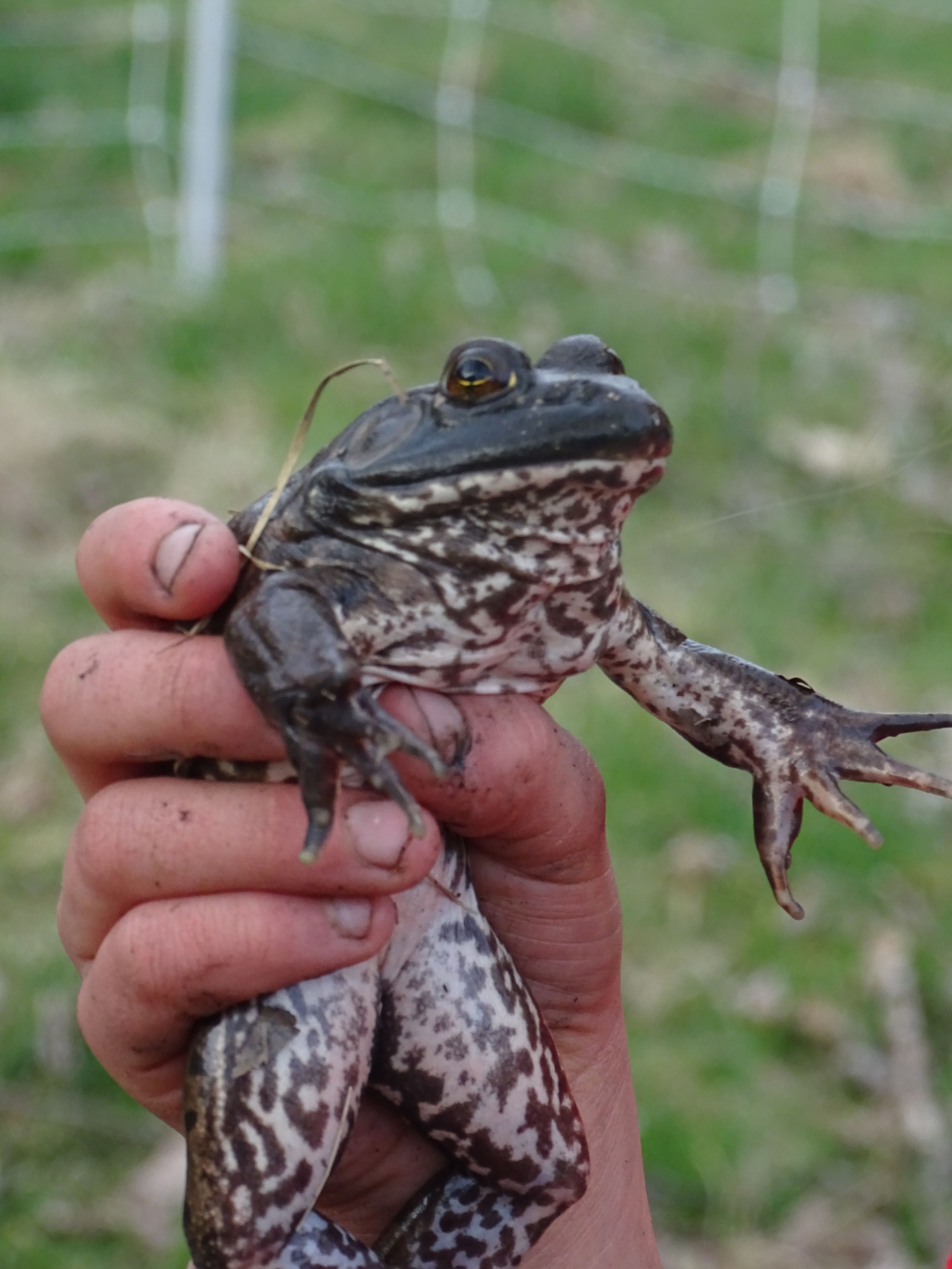
appearing there too. The picture above, I believe, is of one of her
favorites, named Diver. She caught him every year, many times, in
either the puddle pond or one of the water troughs since she was in
Kindergarten. He in turn encouraged her to study frogs, learn how to
tell their sex, and even identify them individually.
A
long look down through the woods shows a swelling of reddish buds and
tiny green honeysuckle leaves. My grandfather used to say that when
those leaves were the size of a squirrel's ears, it was time to hunt for
morels - finishing up around the time the oak leaves become the same
size.
Closer, the grass has suddenly started to get a healthy color and the sheep and goats are noticing. This is the season where it gets harder to keep them inside their fences munching hay. Like many children, they do not understand that letting the grass expand it's roots and get some height now will assure of more and better grass for them in the heat and drought of summer. Though they live their live outside, they do not understand how to live seasonally, how to eat seasonally. That is the job of the shepherd.
When I was growing up, the grocery stores didn't have much in the way of "out of season" produce. Some things, like "keeper" apples might be available throughout much of the year, but the arrival of strawberries would spark a call chain across the partyline telephones.
"The A&P has their strawberries in," a breathless voice would intone before hanging up and running into town to join the feeding frenzy. To be sure, we would have our own strawberries soon, but the store bought were larger and earlier. We didn't know about the sprays and such that were involved in beating the local farmer to the market.
Living and eating seasonally is less common nowadays when massive global supply chains cater to our most basic, immediate wants. I would like to thank you for understanding that our humble products are raised and grown seasonally, and our supplies are sometimes shorter than we wish. Living seasonally is a lifestyle and a mindset. Not just eating foods that are in season, but participating in seasonal activities, celebrating holidays and festivals that are meaningful to you in season, and simply trying to be aware of the rhythm and passing of life.
Seasonal living is flowing and working with the rhythms of the year.
Thank You for being a part of our little farm. It is not easy to support local farms when they don't always have all you need. Your support has helped us to shorten the food supply chain just a little, and strengthens our community.
Dave